
History & Culture of Patharkhmah Civil Sub-Division
The Living Heritage of Western Ri-Bhoi
● The Western Gateway: Administrative Hub and Strategic Location
Patharkhmah stands as a rapidly emerging administrative and economic epicenter in the western reaches of the Ri-Bhoi District, Meghalaya. As the headquarters of the Patharkhmah Civil Sub-Division, it serves as the critical institutional bridge connecting over 125 remote villages of the Jirang region with the central district administration at Nongpoh.
The sub-division was officially established on November 24, 2022, and formally inaugurated on December 2, 2022, by the Hon’ble Chief Minister of Meghalaya, Shri Conrad K. Sangma. This administrative milestone represents a key component of the state government’s decentralized governance initiative, specifically designed to bring essential public services closer to citizens in this frontier region.
Strategic Positioning: Patharkhmah is located approximately 67 km from the district headquarters at Nongpoh and roughly 119 km from the state capital, Shillong. More significantly, its proximity to Guwahati—only about 60 km away—positions it as a vital commercial gateway between Assam and Meghalaya. This strategic location has historically made it an important transit point for interstate trade and cultural exchange.
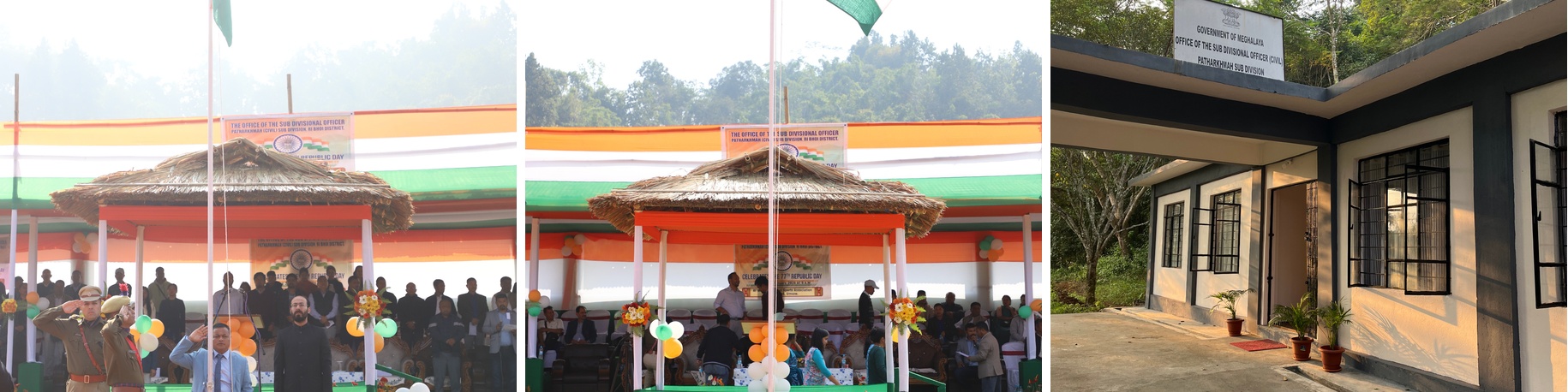
Today, the sub-division headquarters functions as a comprehensive “one-stop” governance center for the Western Ri-Bhoi belt, housing key offices including the Sub-Divisional Officer (Civil), Community Health Centre (CHC) serving over 35 villages, and various departmental branches that ensure administrative proximity for frontier communities.
● The Fruit Bowl of Western Ri-Bhoi: Agricultural Heritage
The region is celebrated for its robust agricultural foundation and is widely recognized as the “fruit bowl” of Western Ri-Bhoi. The landscape is characterized by rolling foothills and remarkably fertile lowlands, which offer distinct advantages over the rockier terrains typically found in the higher Khasi Hills. This favorable geography creates a sub-tropical microclimate that supports diverse agricultural activities.
Primary Agricultural Products
Horticultural Excellence:
- Pineapples: The region produces high-quality Kew and Queen varieties, known for their sweetness and juice content.
- Bananas and Litchis: Extensively cultivated across the rolling hills and valleys.
- Areca Nut: An important plantation crop providing consistent income.
Cash Crops and Spices:
- Ginger: The locally cultivated Nadia variety is prized for its low fiber content and intense aroma.
- Black Pepper and Turmeric: High-value spices that thrive in the humid climate.
- Broom Grass: Large-scale cultivation providing sustainable livelihoods.
Emerging Industries:
- Rubber Plantations: The last decade has witnessed significant expansion of rubber cultivation, which has become a major economic driver due to the region’s favorable low-altitude climate.
The vibrancy of this agricultural economy is most evident in the local markets, where farmers from across the sub-division gather to trade fresh organic produce, creating a bustling hub of economic and cultural activity.
● Historical Development: From Settlement to Sub-Division
Early Settlement (1953)
The development of Patharkhmah as a modern settlement began in 1953 under the visionary leadership of its first Sordar (headman), the late Shri Rishmon Syngkli. The village was established with an initial community of approximately 80 households, primarily engaged in agriculture and border trading. The community’s growth was significantly aided by its location along the PWD road connecting Dispur to Shillong, which served as a major economic and transportation artery.
Traditional Governance Framework
The governance landscape of Patharkhmah reflects the sophisticated traditional Khasi political system. The village falls under the jurisdiction of the Hima Nongkhlaw, one of the historically significant Khasi chieftainships, while much of the surrounding region operates under the Jirang Syiemship. This dual traditional governance structure coexists harmoniously with modern administrative systems.
At the community level, the Village Dorbar system serves as the practical expression of traditional democracy. These village assemblies, presided over by the Sordar, function as forums for dispute resolution, community decision-making, and developmental planning.
Key Historical Milestones
- 1953: Formal establishment of Patharkhmah village under Sordar Shri Rishmon Syngkli.
- 1980s: Community-led initiatives for local education infrastructure.
- 2002: Utilization of national employment programs for community asset creation, including water body restoration.
- 2017: Recognition as an Administrative Unit under Ri-Bhoi District.
- 2022: Historic upgrade to Civil Sub-Division status.
- 2025: Establishment of Patharkhmah Model Degree College.
● The Matrilineal Social Fabric: Khasi-Bhoi Cultural Identity
The cultural identity of Patharkhmah is deeply rooted in the traditions of the Khasi-Bhoi sub-group, which follows one of the world’s most enduring matrilineal systems. This social organization has profound implications for family structure, property rights, and community governance.
The Matrilineal System
In Khasi-Bhoi society, family lineage is traced through the mother, and the Ka Khadduh (youngest daughter) traditionally inherits ancestral property and serves as the custodian of family traditions. This system creates a social architecture where:
- Descent and clan identity are traced through the maternal line.
- The Ka Khadduh maintains the family home and cares for aging parents.
- Women hold central roles in property management and cultural preservation.
- The maternal uncle (Kni) serves as advisor and male guardian of the family unit.
Community Values and Lifestyle
The community is characterized by strong values of collective responsibility and environmental stewardship. Traditional bamboo craftsmanship remains an important cultural practice, with skilled artisans producing essential items including:
- Intricate baskets for agricultural and domestic use.
- Traditional rain shields (knup) worn as protection against heavy rainfall.
- Structural elements for traditional architecture.
While Christianity (primarily Presbyterian) is now the dominant religion, it coexists harmoniously with traditional beliefs and practices. The community maintains deep reverence for nature, forests, and rivers, which remains central to both their agricultural life and cultural identity.
● Traditional Festivals and Cultural Expressions
Ka Shad Sajer: The Sacred Agrarian Dance
The most significant cultural expression in Patharkhmah is Ka Shad Sajer, a ceremonial agrarian dance performed to celebrate the spring season and invoke blessings for a bountiful harvest. This traditional dance represents far more than entertainment—it is a sacred ritual connecting the community to its agricultural roots and ancestral traditions.
Key Elements of Ka Shad Sajer:
- Symbolic Formation: Performers move in circular formations representing the cycle of nature and community unity.
- Traditional Attire: Women wear elegant silk garments (jainsem or dhara) with traditional jewelry, while men perform in dhotis, waistcoats, and traditional headwear.
- Sacred Music: The dance is accompanied by the rhythmic beats of ka nakra (traditional drums) and the melodic sounds of tangmuri (flutes).
- Cultural Significance: The performance serves as thanksgiving to the Creator and traditionally marks important phases in the agricultural calendar.
Community Celebrations
The cultural calendar includes various festivals reflecting both indigenous heritage and the multicultural character of this border region:
- Christmas and New Year: Celebrated with community carol singing and elaborate feasts.
- Rongali Bihu: The Assamese New Year festival participated in by all communities.
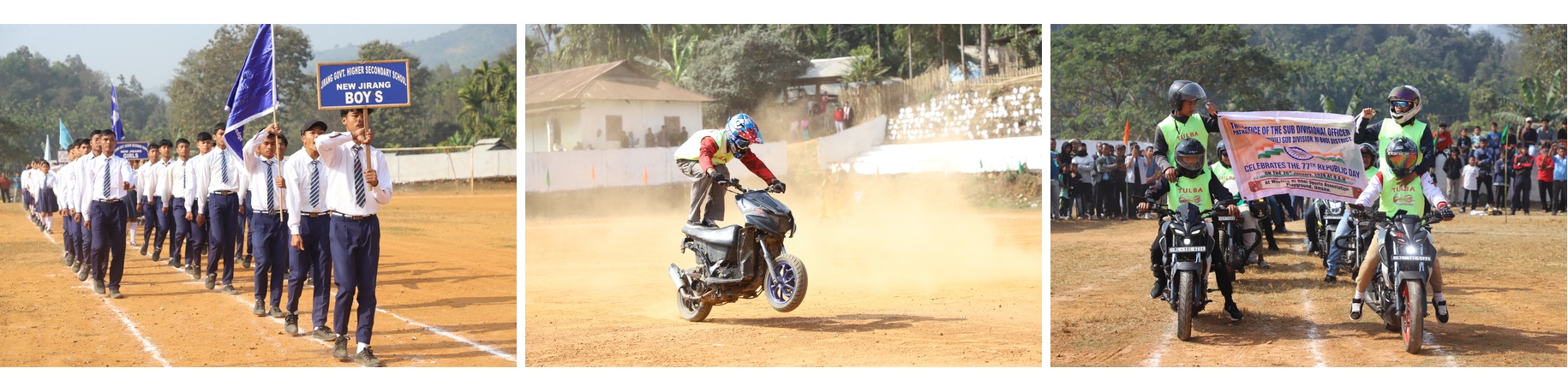
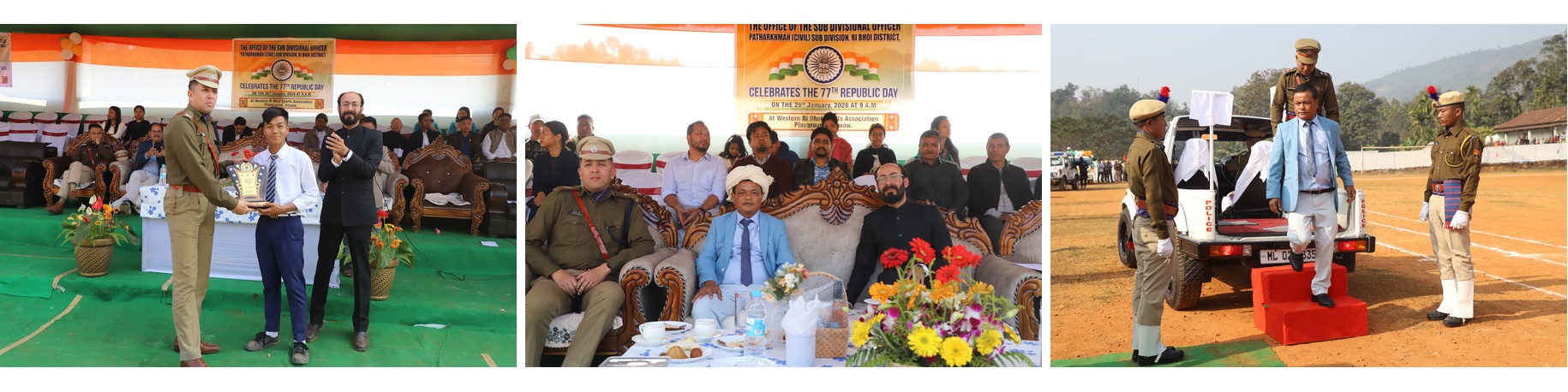
- National Celebrations: Independence Day and Republic Day observed with cultural programs and community gatherings.
● Demographic Profile: The People of Patharkhmah
The Patharkhmah Civil Sub-Division represents a vibrant community that reflects both its indigenous character and border location diversity:
| Demographic Indicator | Statistics |
|---|---|
| Total Population | Approximately 42,000 – 45,000 residents |
| Total Households | Roughly 8,500 households |
| Village Coverage | 125+ villages under sub-divisional jurisdiction |
| Literacy Rate | Between 68% and 72% |
| Sex Ratio | Approximately 960 females per 1,000 males |
Community Composition
Primary Communities:
- Khasi-Bhoi: The predominant indigenous community.
- Jirang: Significant tribal population in the region.
- Karbi and Rabha: Smaller communities, particularly near the interstate border.
Linguistic Diversity:
- Khasi (Bhoi dialect): Primary language of daily communication.
- English: Used for official administration and education.
- Assamese: Widely utilized for interstate trade and border interactions.
The sex ratio of approximately 960 females per 1,000 males reflects the elevated social status of women in the matrilineal Khasi-Bhoi society, where women’s roles as property custodians and family anchors are institutionally recognized and protected.
● Cultural Heritage and Modern Development
Patharkhmah represents a unique synthesis of traditional cultural preservation and modern administrative development. The community has successfully maintained its indigenous identity while embracing educational advancement, technological integration, and economic modernization.
The establishment of the Civil Sub-Division has brought modern governance closer to traditional communities without disrupting their cultural foundations. This balance between heritage preservation and contemporary development serves as a model for other frontier regions in Northeast India.
Future Cultural Initiatives:
- Annual Treilang Festival (launching 2026) to showcase local traditions.
- Integration of traditional crafts with modern marketing.
- Cultural documentation and preservation programs.
- Youth engagement in traditional arts and practices.
For cultural event information, community programs, or heritage documentation, contact the Office of the Sub-Divisional Officer (Civil), Patharkhmah, Ri-Bhoi District, Meghalaya.
Last Updated: 27th April 2026 Cultural Events Calendar: Available through SDO Office and community announcements